


English
Our brand crafts signature pieces inspired by the world’s great thinkers, legendary athletes, visionary leaders, and timeless places like Troy. Each piece blends refined aesthetics with meaningful storytelling, transforming history’s most influential figures and iconic sites into wearable art.
Every design offers a glimpse into the ideas, legacy, and cultural depth behind these names, so you don’t just wear a shirt, you carry a story.
Mission:
To become a brand that enhances intellectual awareness by offering people knowledge, culture, and aesthetics.Reflecting a truly intellectual lifestyle.
Vision:
To become Turkey’s and the global market’s leading premium cultural brand, uniting art, knowledge, and fashion.
Türkçe
Markamız; dünyanın büyük düşünürlerinden efsanevi sporculara, vizyoner liderlerden Truva gibi zamansız mekânlara kadar birçok ilham kaynağından esinlenen özel tasarımlar yaratır. Her parça, rafine estetiği anlamlı bir hikâyeyle birleştirerek tarihin en etkili figürlerini ve ikonik yerlerini giyilebilir birer sanat eserine dönüştürür.
Her tasarım, bu isimlerin ardındaki fikirleri, mirası ve kültürel derinliği yansıtarak yalnızca bir tişört değil, bir hikâye taşımanı sağlar.
Misyon:
İnsanlara bilgi, kültür ve estetik sunarak entelektüel farkındalığı artıran, gerçek bir entelektüel yaşam tarzını yansıtan bir marka olmak.
Vizyon:
Sanatı, bilgiyi ve modayı bir araya getirerek Türkiye’nin ve global pazarın önde gelen premium kültür markası olmak.
THE FIRST WOMEN
After Prometheus steals fire and gives it to humans, Zeus becomes angry and decides to punish humankind. He orders the creation of Pandora, the first woman, beautifully crafted by the gods, but given both gifts and hidden traits, including curiosity among them.
Pandora is given a sealed jar (later called a “box”) and told never to open it. Unable to resist curiosity, she opens it, and all the world’s evils (sickness, sorrow, conflict, and suffering) escape. She closes the lid just in time to keep Hope inside.


(1813–1855) was a Danish philosopher, theologian, and writer widely considered the father of existentialism.
His work centered on the individual’s inner life, freedom, choice, responsibility, and the anxiety produced by confronting one’s own possibilities.
He argued that truth is not merely objective but something personally experienced, emphasizing inwardness and authenticity.
He criticized institutionalized Christianity for losing the personal, lived dimension of faith.
He introduced influential concepts such as:
Leap of faith – choosing belief despite uncertainty
Angst (anxiety) – the dizziness of freedom
Authenticity – becoming one’s true self
Stages of existence – aesthetic, ethical, religious
Importance:
Kierkegaard’s ideas opened the path for modern existentialism and shaped the thought of Heidegger, Sartre, Camus, and contemporary theology. His emphasis on subjectivity, meaning, and personal responsibility remains central to modern philosophy.
The Quote
“Life is not a problem to be solved, but a reality to be experienced.”


(1756–1791) was an Austrian composer and one of the greatest musical geniuses in history. A child prodigy, he began composing at a very young age and went on to create over 600 works across nearly every musical form of his time, including symphonies, operas, chamber music, and sacred works.
Mozart’s importance lies in his ability to combine technical mastery with emotional depth and clarity. His music captures the full range of human experience—joy, sorrow, tension, and transcendence—while remaining elegant and accessible. He played a central role in shaping the Classical style and deeply influenced the development of Western music.
Mozart remains a timeless symbol of creative brilliance and artistic freedom, demonstrating how imagination and discipline together can produce works that speak across cultures and centuries.
-English- “Rondo alla Turca” (commonly known as Mozart’s Turkish March) is the third movement of Wolfgang Amadeus Mozart’s Piano Sonata No. 11 in A major (K. 331), composed around 1783. It is one of the most recognizable and enduring pieces in classical music. Its importance lies in how it brings the alla turca style,inspired by Ottoman Janissary music, into the Western classical tradition. Through lively rhythms, repeated motifs, and percussive piano techniques, Mozart translated the sound and energy of Eastern military music into a refined Classical form. Beyond its playful and energetic character, “Rondo alla Turca” stands as an early and powerful example of cross-cultural exchange in music. It symbolizes the universal language of music and Mozart’s ability to transform cultural influence into timeless artistic expression. - Türkçe - “Rondo alla Turca” (Mozart’ın Türk Marşı), Wolfgang Amadeus Mozart’ın La Majör Piyano Sonatı No. 11 (K. 331) adlı eserinin üçüncü bölümüdür ve 1783 civarında bestelenmiştir. Klasik müziğin en tanınan ve en ikonik parçalarından biridir. Eserin önemi, 18. yüzyıl Avrupa’sında Osmanlı Yeniçeri müziğinden esinlenen “alla turca” akımını Batı klasik müziğine ustalıkla taşımasından gelir. Mozart, ritmik vurgular, tekrar eden motifler ve piyanoda vurmalı çalgı etkisi yaratan tekniklerle Doğu’nun ses dünyasını Batı formuyla birleştirmiştir. “Rondo alla Turca”, yalnızca enerjik ve akılda kalıcı yapısıyla değil, kültürler arası etkileşimin erken ve güçlü bir örneği olmasıyla da önemlidir. Doğu ile Batı arasında sanatsal bir diyalog kuran bu eser, müziğin evrensel dilini ve Mozart’ın hayal gücünü aşan yaratıcı vizyonunu simgelemeye devam etmektedir.

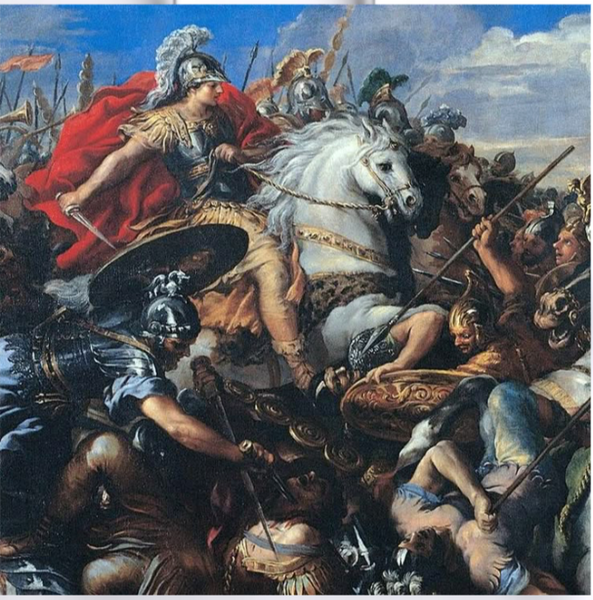
Alexander the Great (356–323 BCE) was the king of Macedon and one of history’s most influential military commanders. Tutored by Aristotle and trained by his warrior-king father, Philip II, Alexander combined strategic brilliance with an unmatched ambition for conquest.
By the age of 30, he created one of the largest empires the world had ever seen—stretching from Greece and Egypt to Persia, Central Asia, and the edges of India.
Beyond his military genius, Alexander played a crucial role in spreading Hellenistic culture—a fusion of Greek, Egyptian, Persian, and Eastern traditions. This cultural blending transformed art, science, language, philosophy, and trade across three continents, shaping the ancient world for centuries.

